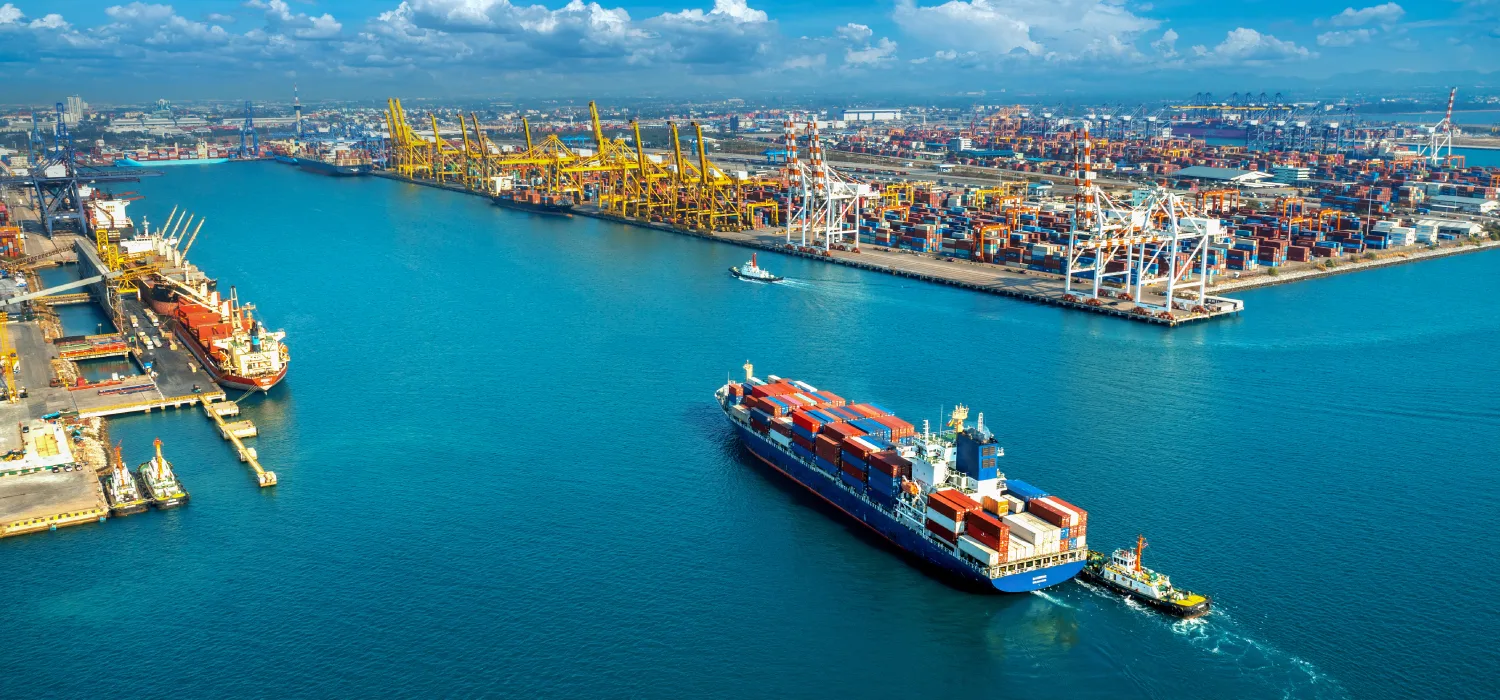
European ports: Chinese influence worries Member States
In recent months, concern has been growing on several fronts over the economic and political influence of China in European ports.
The debate has been revived, also following the offer made by Cosco to buy 35% of Tollerort Terminal (CTT), a small container terminal in Hamburg.
According to a report by the consulting firm McKinsey, between 2021 and 2022 Chinese investment in airport infrastructure rose by more than 50%. Also in 2022, the Asian giant became the leading foreign investor in port infrastructure in Europe.
To date, Cosco holds shares in seven European countries, Italy among them.
The reasons behind Chinese expansion
The aims of strengthening the Chinese presence in European ports are varied.
First of all, the intention of consolidating its global position as an economic power.
According to the latest report published by Alphaliner at the end of August, Chinese port operators had made investments in as many as 31 container terminals located in Europe and the Mediterranean. Strategic ports, located, for example, in Greece, in Belgium and in Vado Ligure, Italy.
China is the European Union's main trading partner, and expanding its logistics footprint in specific areas can only simplify trade and reduce transport costs, putting the Asian giant in an advantageous position to ask for, and obtain, more favourable commercial terms in any negotiations.
Not only that: investing in port infrastructure could open up access to new markets for the country.
Countermeasures by individual countries
Some countries, such as Japan, Australia, the United States and the European Union itself, are trying to adopt a series of countermeasures to prevent any risks arising from Chinese expansion. One example is the stricter screening of foreign investment in infrastructure, which the Italian government also introduced in 2022. Or, again, counter-investment by Member States in port and logistics infrastructure to reduce their dependence on China.
At present, it is not possible to know whether the countermeasures are really necessary or effective. We will simply have to wait and see how events develop politically and economically.
One thing, however, remains certain: China remains the EU's main trading partner and also its third-largest importer.